A field guide to the floor below, for Lakewood homes
Musty basement or crawl space in Lakewood? Find the source, then fix the smell.
Most musty lower levels in Lakewood trace back to water you can’t see: bare soil under a ranch, a carpet pad that never dried, insulation sagging onto the dirt. This guide walks you from the smell to its source and tells you when the moisture has to be fixed before anyone treats the odor.
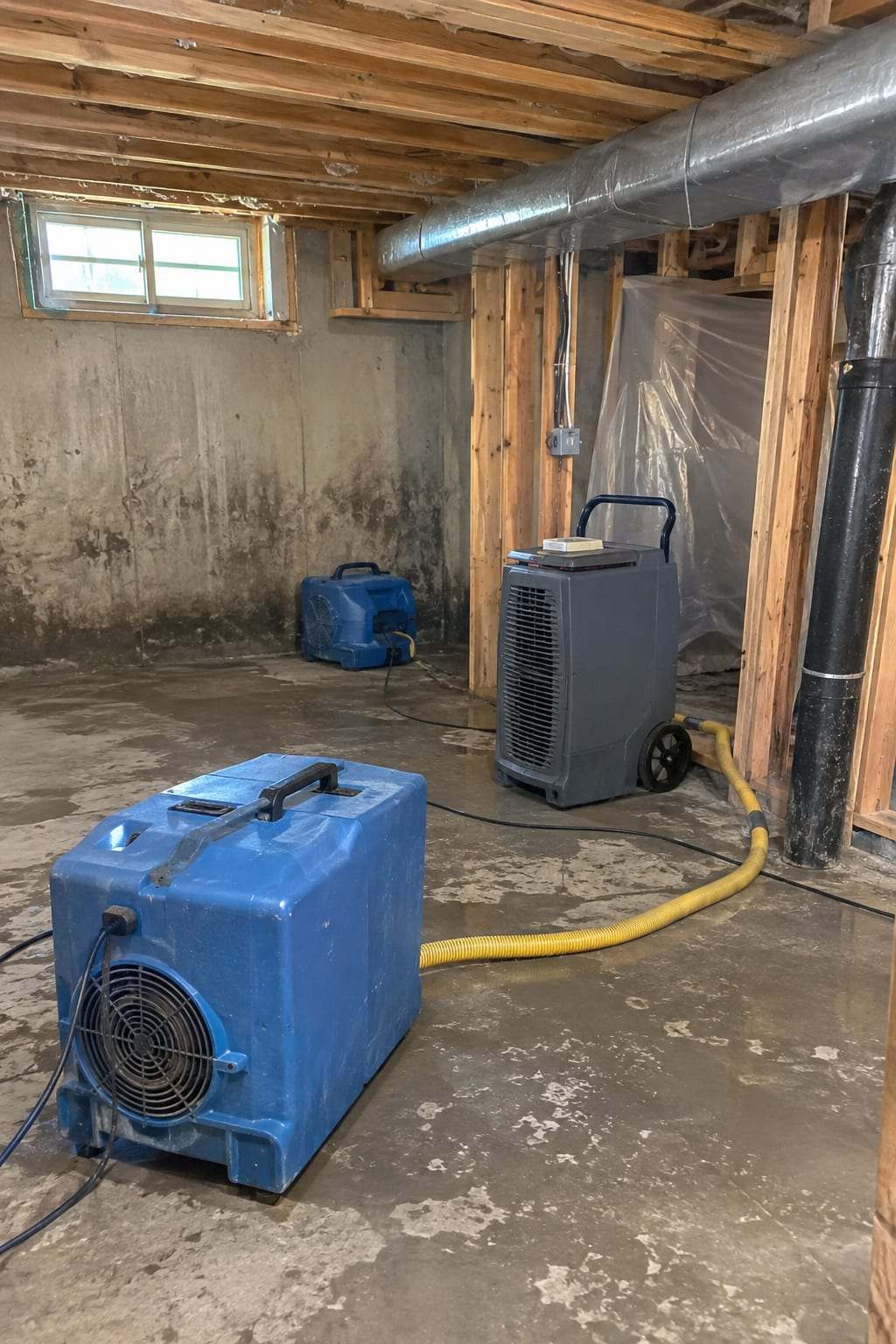
Where you notice it
Your nose is reading a moisture problem
That musty, mildewy note usually comes from mold and mildew growing on something that stays damp. Below the main floor the dampness has a short list of sources: summer humidity condensing on cool walls and pipes, bare soil, small seepage, and old leaks that someone dried with fans and called done. Cardboard, carpet, insulation and the paper face of drywall hold the smell longest.
Crawl space air doesn’t stay in the crawl space. Warm air rising through the house draws air up from below through gaps around pipes, wires and ducts, so you often notice the smell in a bedroom instead of where it starts. Lasting treatment removes the residue that smells and names the moisture that would bring it back.
Dry the space first. Treat the smell second. Reverse the order and the smell comes back.
The first question
Is it a moisture problem or an odor problem?
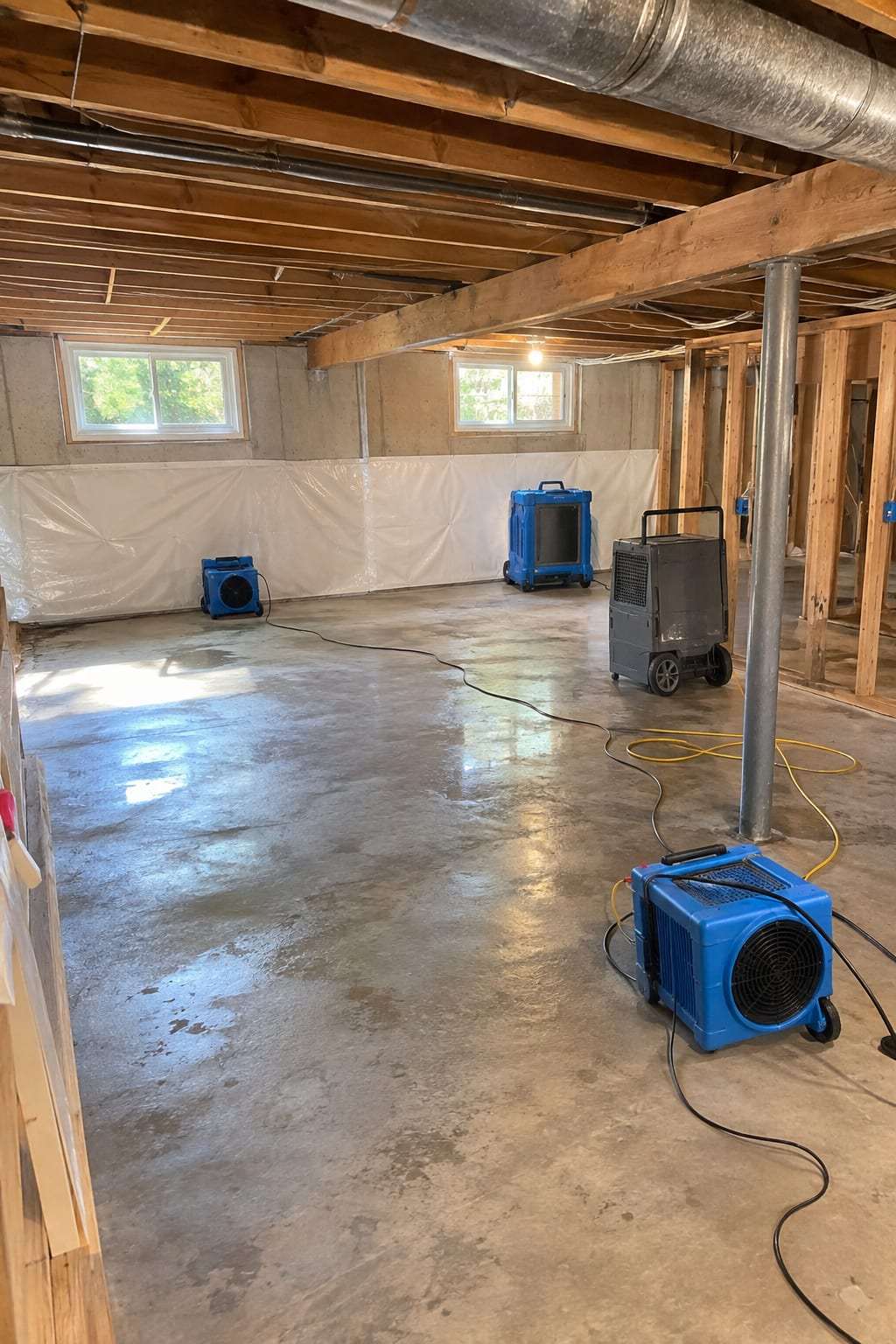
Odor treatment can’t fix active moisture. If something down there is still wet, the right trade fixes it first. Read both columns and see which one your basement matches.
Fix moisture first Wet
- Humidity readings above 60% that don’t drop with a dehumidifier running
- Damp spots, white crusty deposits (efflorescence) or water lines on the walls
- Visible growth on drywall, wood or stored boxes
- A smell that gets worse after rain or snowmelt
Any one of these is a job for waterproofing, drainage, plumbing or mold remediation before anyone treats odor.
Odor treatment can help Dry
- The space reads dry on a moisture meter and a hygrometer
- The smell is old: a leak since repaired, stored items, aging carpet
- It’s concentrated in materials, not coming from a live source
- It started with a one-time event such as smoke, a spill or an animal
Get the moisture readings in writing either way. They tell the next person what they’re walking into.
One level down
Five places the smell usually lives
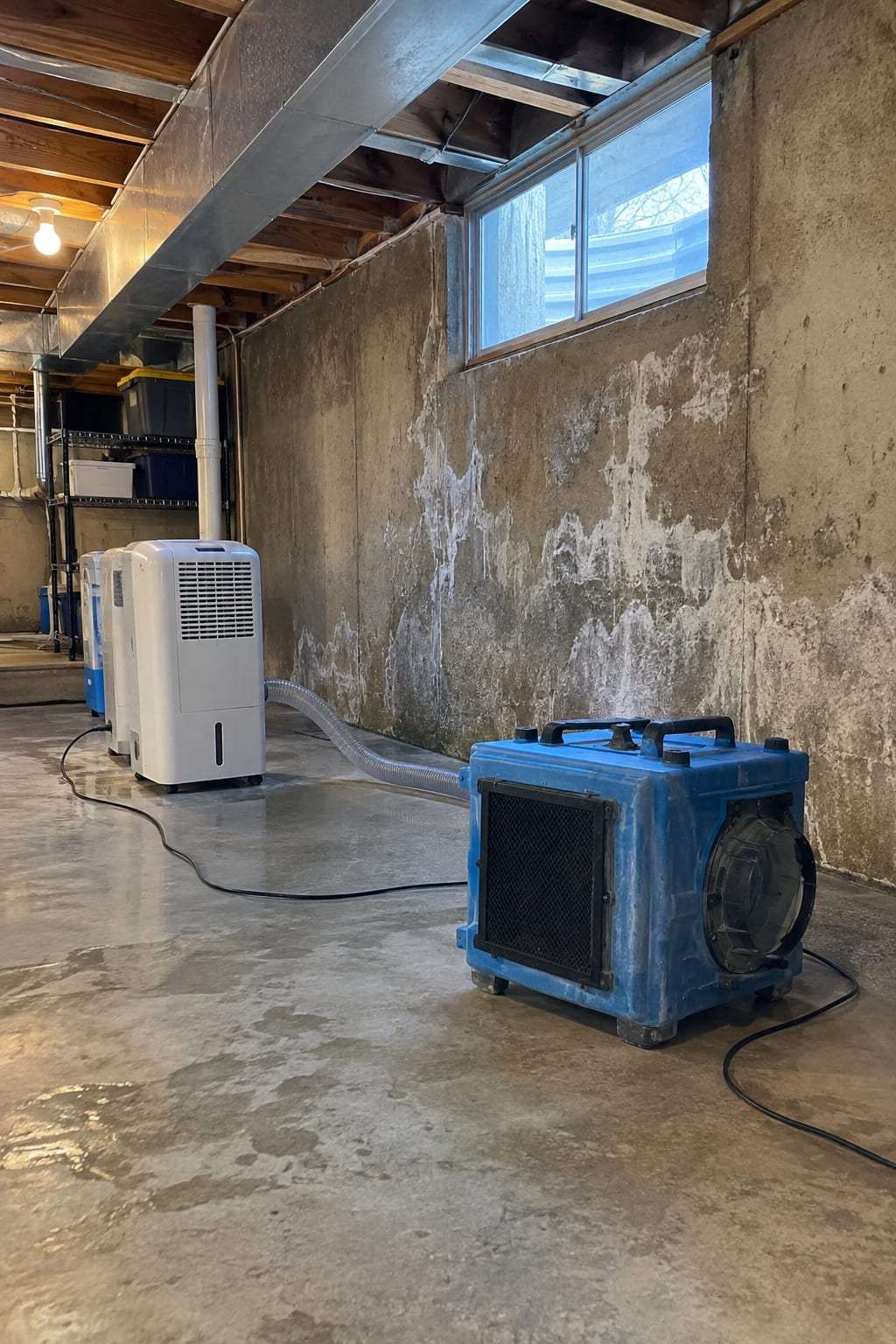
A crawl space lined with a vapor barrier up the foundation walls. Bare dirt is the opposite of this. Representative photo.
- Crawl space floor
Bare soil or a torn vapor barrier in the crawl space, releasing ground moisture into the air under the floor.
- Foundation walls
Summer humidity meeting cool foundation walls and condensing on them.
- Basement floor
Carpet or pad that got wet once and never dried all the way through.
- Under the subfloor
Crawl space insulation that sagged, soaked up water or turned into a nest.
- Cracks and window wells
Seepage at foundation cracks or window wells after storms and snowmelt.
This weekend
Four checks to make before you call anyone
Leave an inexpensive hygrometer downstairs for a few days. Readings above about 50% feed musty odors.
Shine a flashlight through the crawl space hatch. Look for standing water, bare dirt and insulation lying on the ground.
Lift boxes and rugs off the basement floor and check underneath for stains and damp spots.
Pour water into any floor drain you rarely use to refill its trap.
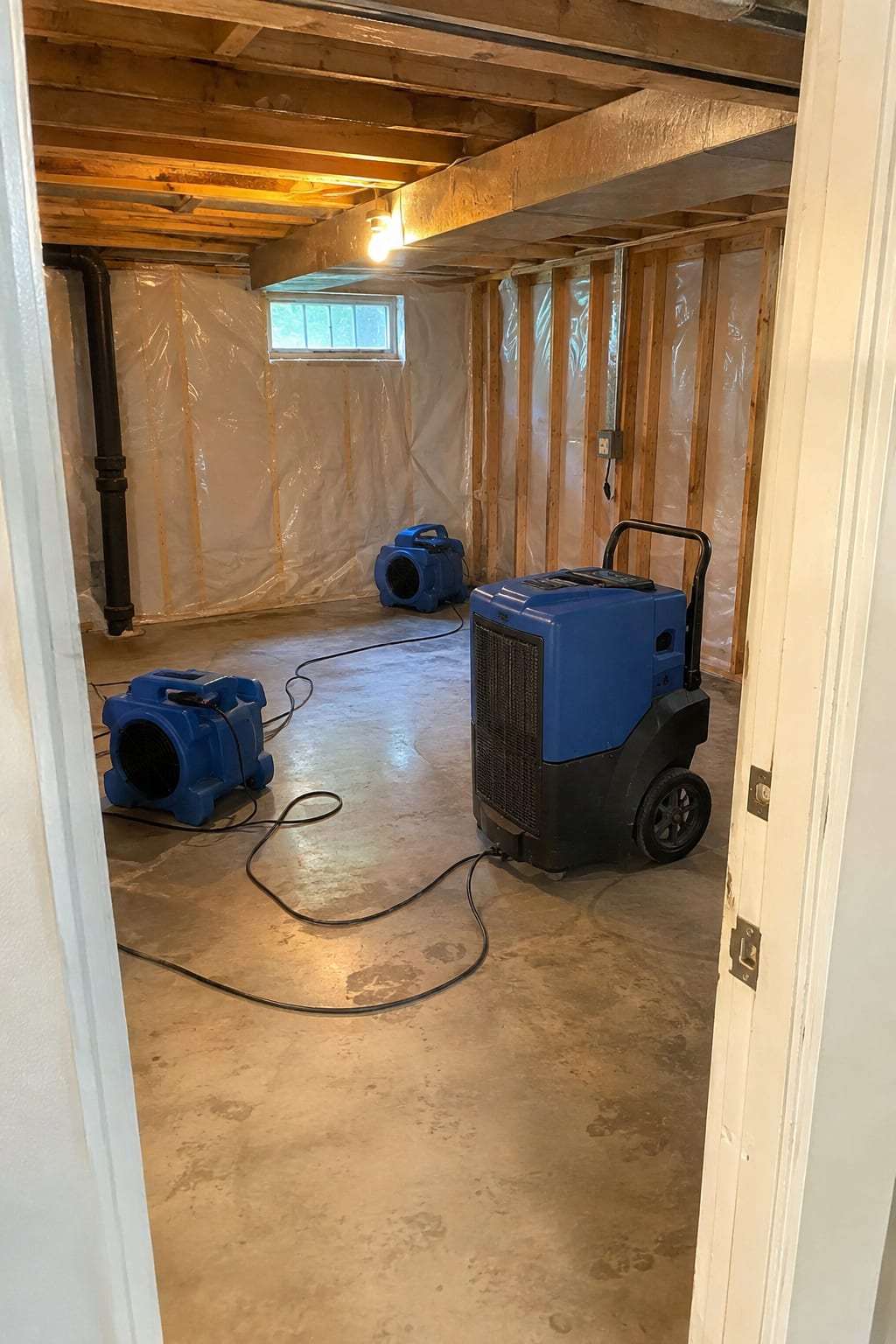
Skip these
- Deodorizing over active mold or a leak. Remediation or repair comes first, or the smell returns.
- Counting on a dehumidifier to pull out odor already soaked into carpet, insulation and boxes.
- Covering the smell with sprays or candles while the source is still wet.
Under the floor
How odor treatment works when it’s done in order
Good odor work starts with an inspection and ends with a plan to keep the space dry.
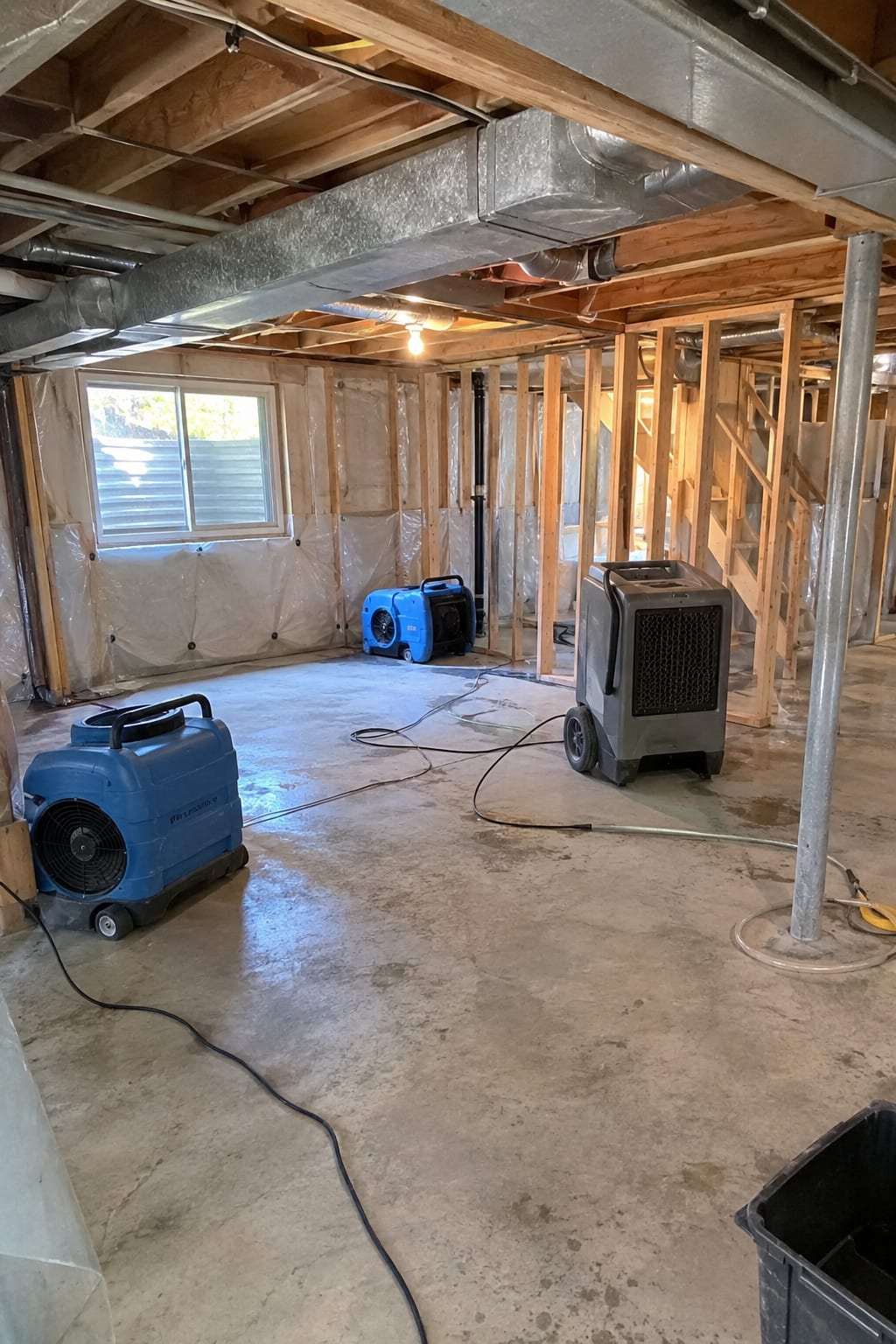
Protective suits and respirators are standard in a wet crawl space. Representative photos, not work done for this site.
- Step 1 of 5
Investigate
Walk the basement and crawl space, find where the smell is strongest and look for moisture or growth.
- Step 2 of 5
Sort the materials
Decide which carpet, pad, insulation and stored items hold odor, and which can be cleaned instead of thrown out.
- Step 3 of 5
Fix the moisture first
Name the leak, seepage, vapor barrier or mold problem that has to be corrected before treatment, and the trade that handles it.
- Step 4 of 5
Treat
Treat the affected materials, then the whole space, including the air pathways into the rooms above.
- Step 5 of 5
Keep it dry
Set up the dehumidifier, ground cover and storage changes that stop the smell from coming back.
Lakewood and next door
Why Lakewood lower levels smell the way they do
Lakewood, west of Denver in Jefferson County, is full of ranches and split-levels built from the 1950s through the 1970s, many over basements, crawl spaces or both. Decades of small seepage, plumbing leaks and humid summers left odor behind in some of them, and many crawl spaces went in without a modern vapor barrier.
Colorado air is dry most of the year, but rooms below grade stay cool, and summer humidity condenses on foundation walls and cold-water pipes. A dehumidifier, a sound ground cover and better storage habits prevent most new odor. Treatment handles the odor that has already soaked in.
Wheat Ridge, Edgewater and Golden next door have many houses of the same age, with the same basement and crawl space questions.
EPA guidance recommends keeping indoor humidity between about 30% and 50%.
If the odor started with a sudden leak or flood, insurance may cover part of the cleanup. Odor from years of humidity usually isn’t covered.
If an inspection finds active mold growth or water coming in, that gets remediated or repaired before anyone deodorizes.
ZIP codes served: 80226 (Denver), 80232 (Denver), 80214 (Denver), 80215 (Denver), 80227 (Denver), 80235 (Denver), 80228 (Denver).
Also nearby: 80219, 80204, 80223, 80033, 80236, 80212, 80211, 80202, 80203, 80110, 80002, 80218, 80209, 80419, 80123, 80210, 80206, 80205.
Go deeper, one smell at a time
Guides, worksheets and neighborhood notes for Lakewood houses.
Field guides18
- Musty, sewer or gas: what kind of smell is coming from your basement?
- Why the lower level of a split-level smells musty every summer
- How crawl space odor gets into the bedrooms of a ranch house
Basement odor questions
Does a musty smell mean I have mold?
Often it does, even when you can’t see any. Mold or mildew is growing somewhere damp. The smell can also come from wet materials, bare crawl space soil or a dry drain trap, so an inspection is the way to find out which.
Will odor treatment get rid of mold?
No. Odor treatment deals with smell. Active mold growth needs proper remediation and a fix for the moisture behind it. A careful odor provider tells you when that has to come first.
How does a crawl space make the whole house smell?
Warm air rising through a house draws air up from the crawl space through gaps in the floor and around ducts and pipes. Whatever the crawl space smells like, the rooms above it eventually smell like too.
Is crawl space odor covered by insurance?
If the odor came from a sudden covered event, such as a burst pipe that flooded the crawl space, related cleanup may be covered. Odor from gradual humidity or seepage usually isn’t. Ask your insurer.
What humidity should my basement be?
Keep indoor humidity between about 30% and 50%. Above that range, mold and musty odors find it easier to start.
Will I have to leave the house during treatment?
Some whole-space treatments keep people out of the treated area for a while. Ask for the exact timing before you schedule.
Why does my basement smell like sewer only some of the time?
A dry floor-drain trap is the usual cause. The U-shaped trap holds water that blocks sewer gas, and in a drain nobody uses the water evaporates. Pour a gallon of water into the drain. If the smell fades within a day, you found it. If it doesn’t, have a plumber check for a cracked vent or line.
Why masking a basement smell fails
What a careful provider asks first
Expect questions about when the smell started, whether the house has a basement, a crawl space or both, and any history of water. Ask whether they inspect before quoting, and get the scope in writing before work starts.
Ask about a basement odor
This form is not connected. This website is a draft preview: no business has been confirmed to receive requests, so the fields below are switched off and nothing can be sent. In an emergency, call 911.
Start with a hygrometer and a flashlight
Check the humidity and look into the crawl space this week. Fix any leak or moisture problem first. Then hire an odor provider you have vetted, with a written scope that covers the basement and the crawl space.