How older basement finishes were built
A common do-it-yourself basement finish from the 1960s and 1970s goes like this: wood furring strips nailed or glued directly to the concrete foundation wall, thin wood-grain paneling nailed to the strips, and sometimes a layer of rigid foam or nothing at all in between. Overhead, a grid of metal channels holds acoustic tiles below the floor joists so pipes and wiring stay accessible.
These finishes trap cool, damp air against the concrete. Furring strips are untreated wood in contact with masonry that can wick moisture. The back side of the paneling is raw fiberboard or plywood. When summer humidity condenses on the wall or a little seepage occurs after storms, the space behind the paneling can grow mildew for years with no visible sign on the front.
Drop ceilings hide a different set of problems. Tiles can absorb water from a slow drip on a supply line, a sweating cold-water pipe or a leaking toilet wax ring upstairs. A stained or sagging tile is the visible clue, but the odor may come from dust and debris on top of the tiles that got wet long ago.
Looking behind the finish without tearing it all out
Start with the ceiling
Push up a few tiles near plumbing, the bathroom above and exterior walls. Look and smell; use a flashlight to scan the tops of other tiles and the joists.
Pull a baseboard
On the wall where the smell is strongest, gently remove a section of baseboard. The bottom of the paneling and furring strip is where moisture shows first.
Check electrical boxes
With power to the circuit off, remove an outlet cover on an exterior wall and look into the gap around the box for staining or a musty puff of air.
Remove one panel if needed
Paneling is often nailed and can be pried off one sheet at a time. Choose the sheet nearest the strongest smell or any visible stain.
Decide on scope
If one panel shows growth, assume neighboring panels on that wall may too. That finding shifts the job from odor treatment toward remediation.
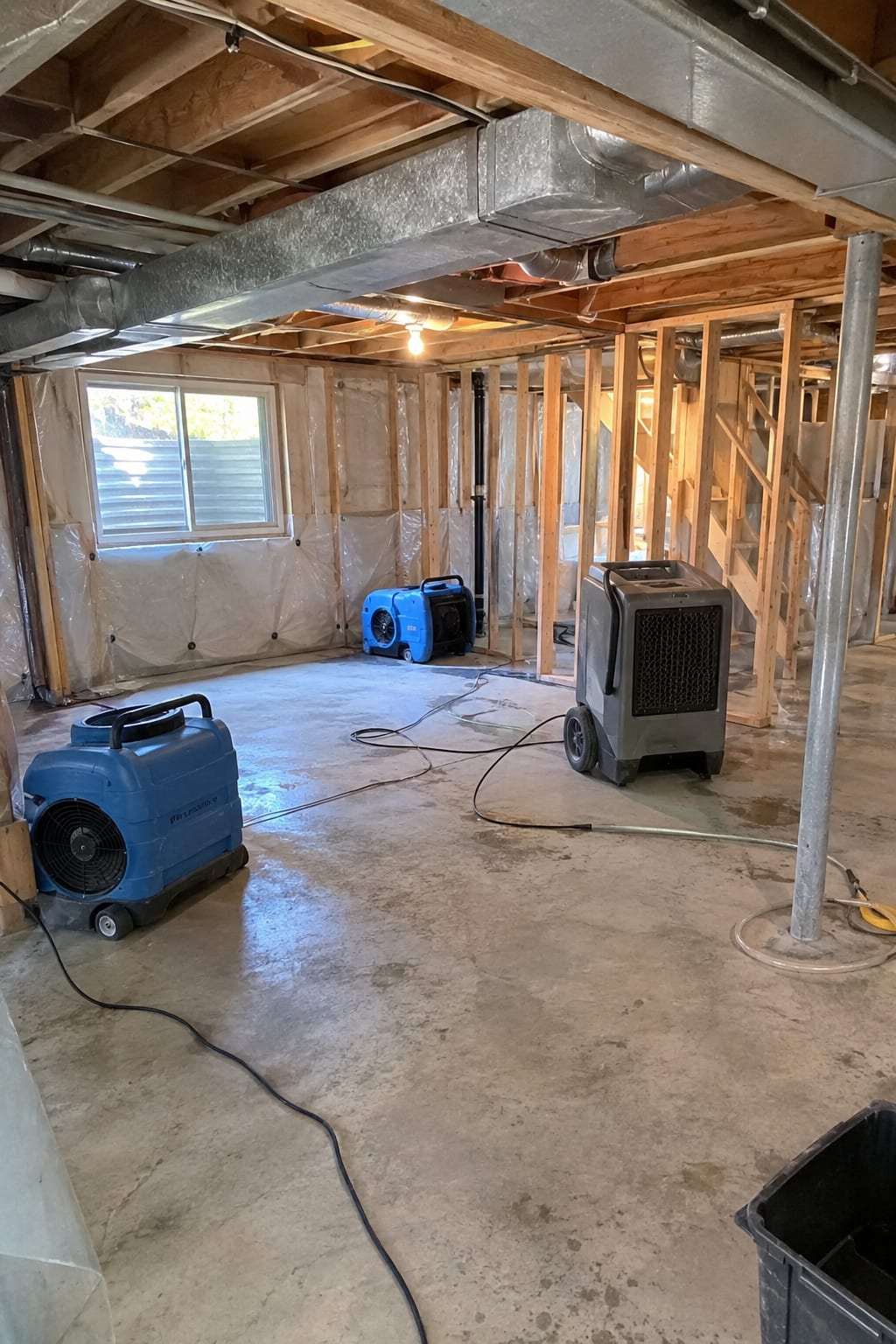
Clues that the finish is hiding the source
General information for Lakewood, not a quote or professional advice. In an emergency, call 911.